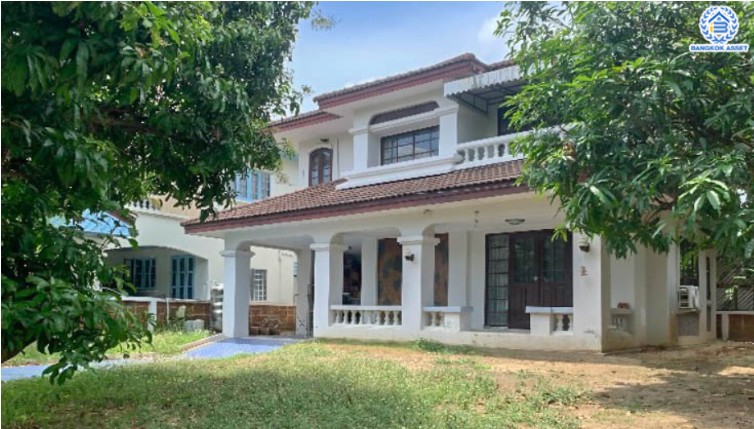
For a long time, building a house from scratch carried a special kind of appeal. It promised freedom, control, and the satisfaction of creating something personal from the ground up. On paper, it still sounds ideal: choose the land, shape the layout, pick the materials, and watch a vision become real. But for many younger buyers in Thailand, that vision is beginning to feel less practical than it once did.
The shift is not only about cost, although cost certainly matters. It is also about time, uncertainty, location, and the growing awareness that a home should serve real life rather than a romantic idea of ownership. As expectations around work, mobility, and financial stability continue to evolve, more buyers are taking a serious second look at pre-owned homes. What was once seen by some as a second-best option is now being viewed in a far more thoughtful light.
The Appeal of Control Is Meeting the Reality of Complexity
Building from scratch often begins with a dream of control. Buyers imagine a house tailored exactly to their taste and routine. Yet once the process starts to unfold, that sense of freedom can quickly become a long list of decisions, delays, and unknowns. Land selection, legal checks, design revisions, contractor coordination, material fluctuations, and timeline overruns all require a level of attention that many people simply do not have room for.
For younger Thai buyers, life is already full. Careers are demanding, family responsibilities remain important, and financial planning has become more cautious. In that context, a home is not just a creative project. It is also a major life structure that needs to be reliable. The thought of spending months, or even longer, navigating a build process can feel less exciting and more exhausting.
A pre-owned home changes that equation. Instead of imagining how a future house might work, buyers can assess a real property in a real neighborhood with visible surroundings and immediate context. That makes decision-making feel less abstract and, for many people, far more grounded.
Buyers Are Prioritizing Everyday Life Over Idealized Plans
One of the clearest changes in buyer behavior is the growing focus on livability. Younger households are asking sharper questions than before. How long is the commute? Is the neighborhood connected to daily essentials? Does the house support a realistic rhythm of life? Is the space large enough where it matters, and efficient where it should be? These questions often lead them toward established homes rather than empty plots and construction timelines.
Pre-owned homes are frequently located in areas that are already functioning as communities. Roads are in place, shops are active, schools and hospitals are accessible, and the wider area has a character buyers can actually experience before committing. That matters deeply in Thailand, where location continues to shape both quality of life and long-term convenience.
This is one reason platforms like Bangkok Assets have become increasingly relevant to buyers who want more than visual appeal. They want properties that make sense in daily life, not just on a blueprint. A house that already stands in a proven location can feel more valuable than a custom build that begins with possibility but comes with years of effort and uncertainty attached.
Financial Confidence Is Becoming More Important Than Fresh Construction
The emotional pressure of home buying often comes from what happens after the deal is done. A house may look impressive at first, but if it stretches the budget too far or creates unpredictable costs, that pressure lingers. Many younger buyers are highly aware of this. They are not simply asking what they can afford to purchase. They are asking what they can afford to live with comfortably.
Building from scratch can carry hidden layers of financial exposure. Even when the initial budget appears manageable, costs can rise through changes in materials, labor, site conditions, or adjustments during construction. That lack of certainty feels increasingly difficult to accept in a period when buyers are more careful about long-term planning.
Pre-owned homes often offer a stronger sense of financial clarity. Buyers can compare the property, the neighborhood, and the asking price in a more direct way. In many cases, they may also gain access to areas that would be far more expensive if they tried to purchase land and build anew. The result is not simply a cheaper route, but a more stable one. That sense of balance can be emotionally reassuring, especially for people buying their first home or making a major move without wanting their life to revolve around a construction process.
The Meaning of Value Is Expanding
Perhaps the biggest change is philosophical. A growing number of buyers no longer define value through newness alone. They are less interested in whether a home is untouched and more interested in whether it offers substance. A good house is increasingly understood as one that fits the realities of how people live, move, rest, work, and plan for the future.
That broader view of value is giving pre-owned homes a different reputation. They can offer mature surroundings, better positioning within the city or suburb, and spaces that feel more settled from the beginning. They may not deliver the fantasy of starting from a blank page, but they often provide something more useful: a home that already speaks the language of daily life.
This does not mean building from scratch has lost all appeal. For some people, it remains the right path. But the wider market shift suggests that younger Thai buyers are becoming less attached to symbolic ideals and more interested in homes that reduce friction, preserve flexibility, and make long-term living feel achievable.
Conclusion
The renewed interest in pre-owned homes is not a passing trend driven by convenience alone. It reflects a deeper shift in how buyers think about homeownership itself. Instead of chasing the prestige or imagination tied to building from zero, more people are evaluating homes through the lens of practicality, emotional ease, and lived experience.
That change says something important about the current generation of Thai buyers. They are not rejecting ambition. They are refining it. They want a home that supports life as it is actually lived, not only as it is imagined in perfect conditions. They are thinking about the value of time, the importance of place, and the comfort that comes from making a decision with fewer unknowns.
In that light, pre-owned homes are being reconsidered not because expectations have become smaller, but because they have become wiser. Buyers are learning that a meaningful home does not need to begin with empty land and a long construction timeline. Sometimes it begins with recognizing that what already exists may offer the strongest foundation for the life ahead.